Hey, I'm Vaibhav, an AI/ML engineer who enjoys building clean, thoughtful systems where the model, the data, and the product experience all have to work together.
I spend most of my time training and evaluating models, wiring up pipelines, and turning research ideas into things people can actually use — with a soft spot for good tooling and readable code.
Outside of ML work, I like exploring new architectures, contributing to small open-source tools, and writing about what I learn along the way.
Projects
RAG · FAISS · FastAPI
Psychiatrists spent 8 min manually retrieving patient session notes before each consultation — tasked with building an AI-powered system to surface relevant clinical history on demand. Architected an end-to-end RAG pipeline using semantic chunking, FAISS vector search, and sentence-transformer embeddings; deployed a Dockerized FastAPI backend with concurrent multi-patient querying validated under load testing. Reduced retrieval time from ~8 min to <10 sec (98% reduction), achieved >90% retrieval relevance across 500+ clinical notes, and cut pre-consultation prep time by ~60% — quantified and reported to stakeholders.
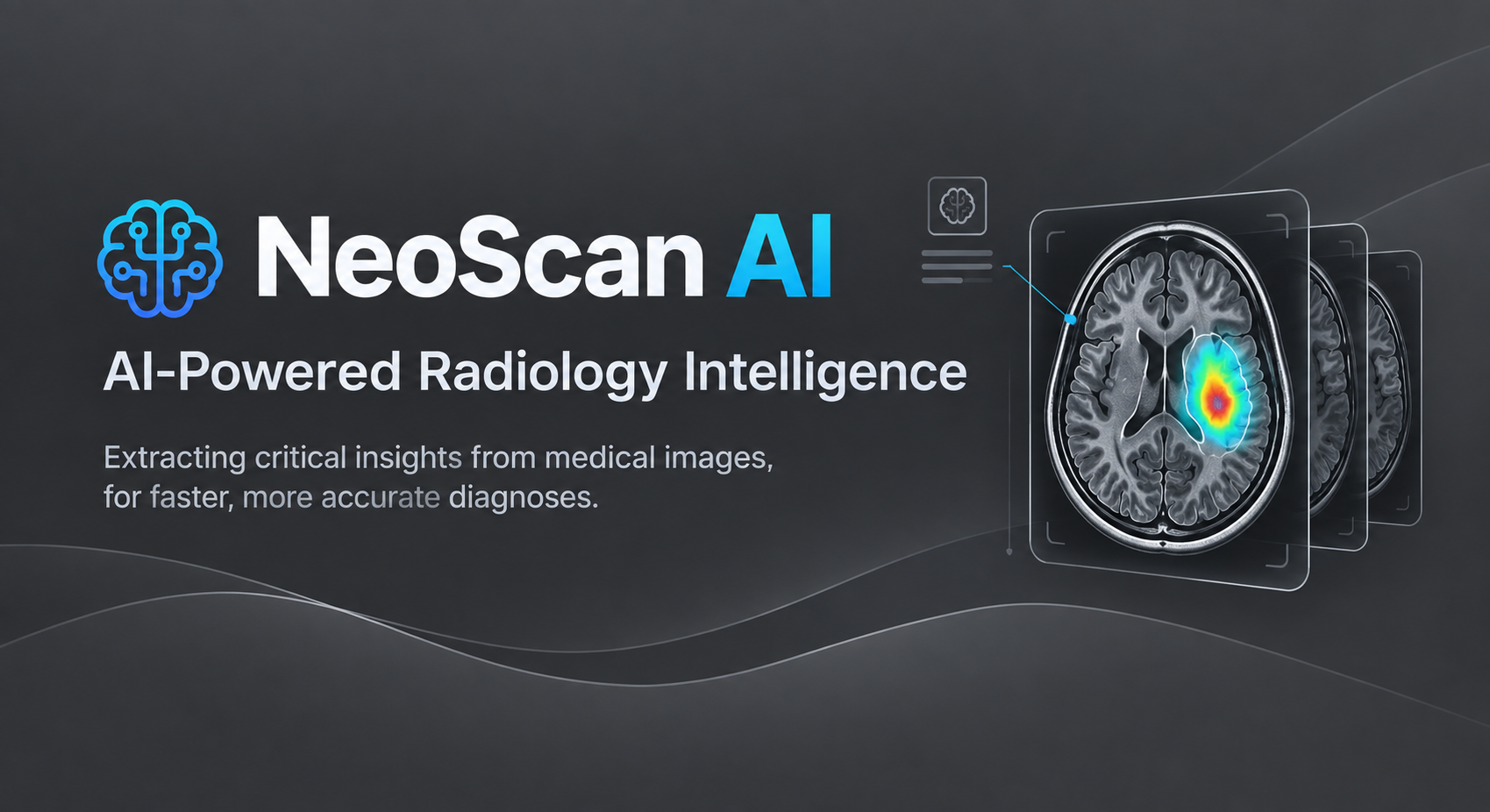
Collaborated with senior leads to assess project requirements, risks, and constraints for a neonatal brain MRI analysis system; contributed to the ML project plan covering data strategy, modeling approach, and deployment milestones. Developed an XAI-enabled deep learning pipeline (UNet + CNN) for neonatal brain MRI segmentation and neurodevelopmental outcome prediction — reducing radiologist review time by ~40% and delivering measurable clinical business impact.
Deep LearningUNetCNNXAIMedical Imaging
ML · Statistical Modelling
Contributed to an end-to-end ML pipeline for insurance purchase prediction (AUC-ROC: 0.87); assisted in understanding business requirements and translating them into feature engineering and modeling strategies. Performed initial data familiarization, identified quality problems, and applied domain-driven statistical analysis (chi-square, ANOVA, VIF) — reducing feature count by 35% while maintaining predictive performance. Ran model tools (logistic regression, gradient boosting) on prepared datasets and sought guidance from senior leads to select the most appropriate technique for the structured customer dataset. Understood and communicated the linkage between the achieved model and the business objective: enabling targeted sales outreach by accurately predicting vehicle insurance purchase likelihood.
ML PipelineLogistic RegressionGradient BoostingFeature EngineeringStatistical Analysis
Built a 10.65M-parameter GPT from scratch in PyTorch, achieving 4.34 validation perplexity on Shakespeare. Implemented GQA/MQA from scratch by sharing K/V projections across query heads, reducing parameters 14% (9.17M vs. 10.65M) with no perplexity loss (4.33–4.34). Built incremental KV-caching for autoregressive decoding and benchmarked MHA/GQA/MQA across cached/uncached inference, finding no speedup at small model scales. Ran a 3×2 MHA/GQA/MQA × cached/uncached ablation, identifying the model-size/sequence-length regime where inference optimizations matter.
Researched, identified, and prototyped a BERT-based NER model using PEFT (LoRA) to extract anatomical locations, clinical observations, and severity from radiology reports — automating key steps in reporting workflows. Trained on BIO-tagged radiology datasets; achieved improved extraction F1 scores while maintaining a lightweight, production-deployable model footprint, demonstrating understanding of the model-to-business-objective linkage.
LangGraph · Claude · FastAPI · SQLAlchemy A multi-step agent that turns plain-English questions into safe SQL and answers in plain English. Includes a deterministic SELECT-only safety guard, automatic retry on query errors, semantic caching for paraphrased questions, schema relevance filtering for large databases, and per-query cost tracking — all exposed via a FastAPI backend.
An autonomous AI agent that scans multiple news sources every morning, filters for relevant AI developments, and emails a curated digest straight to your inbox — no manual browsing required.
DeepSeekPythonAutomation
Fine tuned Biobert
Live
Researched, identified, and prototyped a BERT-based NER model using PEFT (LoRA) to extract anatomical locations, clinical observations, and severity from radiology reports — automating key steps in reporting workflows. Trained on BIO-tagged radiology datasets; achieved improved extraction F1 scores while maintaining a lightweight, production-deployable model footprint, demonstrating understanding of the model-to-business-objective linkage.
NoteVault – AI assisted Clinical Recall System Psychiatrists spent 8 min manually retrieving patient session notes before each consultation — tasked with building an AI-powered system to surface relevant clinical history on demand. Architected an end-to-end RAG pipeline using semantic chunking, FAISS vector search, and sentence-transformer embeddings; deployed a Dockerized FastAPI backend with concurrent multi-patient querying validated under load testing. Reduced retrieval time from ~8 min to <10 sec (98% reduction), achieved >90% retrieval relevance across 500+ clinical notes, and cut pre-consultation prep time by ~60% — quantified and reported to stakeholders.
NeoScan AI – Neonatal Brain MRI Analysis System Collaborated with senior leads to assess project requirements, risks, and constraints for a neonatal brain MRI analysis system; contributed to the ML project plan covering data strategy, modeling approach, and deployment milestones. Developed an XAI-enabled deep learning pipeline (UNet + CNN) for neonatal brain MRI segmentation and neurodevelopmental outcome prediction — reducing radiologist review time by ~40% and delivering measurable clinical business impact.
2024
ML Intern— Unified(3 months)
Read more
Contributed to an end-to-end ML pipeline for insurance purchase prediction (AUC-ROC: 0.87); assisted in understanding business requirements and translating them into feature engineering and modeling strategies.
Performed initial data familiarization, identified quality problems, and applied domain-driven statistical analysis (chi-square, ANOVA, VIF) — reducing feature count by 35% while maintaining predictive performance.
Ran model tools (logistic regression, gradient boosting) on prepared datasets and sought guidance from senior leads to select the most appropriate technique for the structured customer dataset.
Understood and communicated the linkage between the achieved model and the business objective: enabling targeted sales outreach by accurately predicting vehicle insurance purchase likelihood.
Skills
Core Skills
Gen AIMachine LearningDeep LearningNatural Language Processing (NLP)Computer VisionRAGAgentic AI
MLOps & Cloud
AWSAmazon S3Amazon SagemakerMLflowKubernetesCI/CD
Frameworks & Libraries
PyTorchTensorFlowScikit-LearnLangChainHugging Face